When a tooth is badly decayed, cracked or infected, you usually have two options: save it with root canal treatment, or take it out. On the surface, extraction can look like the quicker, cheaper fix. But the full picture, including what happens to the gap afterwards, often tells a different story.
In this guide, the team at East Park Dental in Northampton explains what each treatment involves, what a root canal costs in the UK, and how to weigh up root canal vs extraction for your own situation. We’ll also be honest about when taking the tooth out genuinely is the right call.
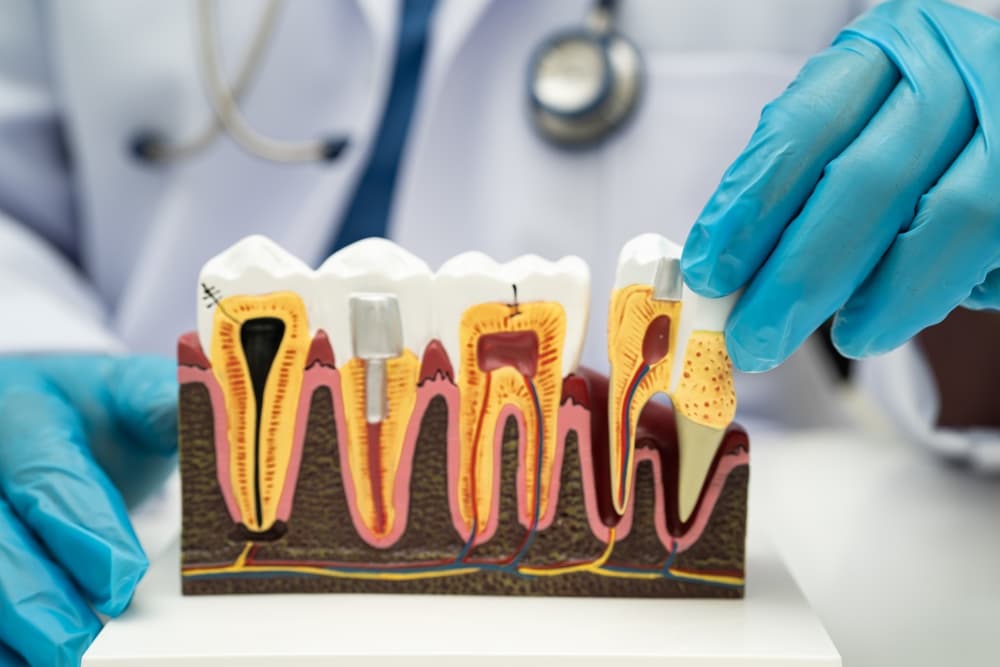
Inside every tooth is a soft core called the pulp, which contains nerves and blood vessels. When decay, a crack or an old deep filling lets bacteria reach the pulp, it can become inflamed or infected. That’s often what causes a throbbing toothache, sensitivity that lingers, or swelling in the gum.
This treatment removes the infected pulp, cleans and shapes the tiny canals inside the root, then seals them to stop bacteria getting back in. It’s done under local anaesthetic, so it should feel much like having a filling. Most back teeth then need a crown to protect them, because a root-treated tooth can become more brittle over time.
An extraction removes the whole tooth. A straightforward extraction is usually quick, and the socket heals over a few weeks. The infection goes with the tooth, but so does the tooth itself, which leaves a gap you’ll need to think about.
In short, a root canal keeps your natural tooth, while an extraction ends the problem by losing it. Neither is automatically right, it depends on how much healthy tooth is left and what you want long term.
Across the UK, the cost of a root canal depends on two things, whether you’re treated on the NHS or privately, and which tooth needs work.
At East Park Dental, root canal therapy starts from £483.75. If you’re a member of our dental plan, the same treatment is £386, a saving of £97.75. Member prices apply once you’ve been on the plan for six months. Where a tooth needs a crown to protect it afterwards, our porcelain crowns start from £890, or £755 for members.
More complex cases may need a longer course of treatment, and we’ll confirm the cost in your treatment plan. Before anything begins, you’ll receive a written treatment plan showing exactly what’s involved and what it will cost, so there are no surprises.
For comparison, a routine extraction at East Park Dental starts from £187.50 (£150 for members), and a surgical extraction from £312.50 (£250 for members). If you later decide to replace the tooth, a dental implant with its crown starts from £2,620. You can see all our fees on our prices page.
An extraction usually costs less on the day. The catch is the gap it leaves behind. Over time, nearby teeth can drift and tilt into the space. Chewing can become harder, the jawbone in that area can also start to shrink. Most people who lose a back tooth end up replacing it because there are downsides if you don’t replace a missing tooth.
That’s where the costs add up. An implant, bridge or denture each need more appointments and more fees. An implant alone often costs over £2,000.
A root canal costs more at the start, but you keep your own tooth. There’s nothing to replace. Treatment usually takes one or two visits, plus a crown. Any tenderness tends to settle within a few days. Your natural bite and feel stay the same.
A tooth that has had root canal treatment and a good crown can last for many years. An implant can also last well, but it needs its own care and checks. Once you add up the full cost, saving the tooth is often the better value choice in the long run.
Our guide to what dental implants cost in Northampton explains the replacement side in more detail.
Saving a tooth isn’t always possible, or always sensible. We’ll be straight with you if a root canal isn’t worth doing.
A tooth with a vertical crack or a split root rarely heals, even after a perfect root canal. In these cases, extraction is usually the kinder option. Sometimes there simply isn’t enough healthy tooth left. Without enough structure, a crown can’t be held securely after treatment.
Advanced gum disease can also loosen a tooth. If the support around it has already gone, saving it may not last. A previous root canal may have failed. If a second attempt has a low chance of success, removing the tooth may make more sense.
Wisdom teeth are another common exception. They’re often hard to reach and rarely play a key role in your bite. Cost and time matter too. If money is tight right now, a carefully planned extraction can be a fair choice. Just make sure you understand what the gap may mean later, and have a plan for it. That decision is yours to make with all the facts.
The right answer starts with a proper look at the tooth. At your appointment, we’ll examine it and take an image of the roots and surrounding bone. We’ll then talk you through what we see. You’ll get a clear explanation of both options. We’ll also show you what each would cost and give you our honest recommendation.
If you’re feeling nervous, you’re not alone. Many people worry that a root canal will hurt. With local anaesthetic, many patients find it feels much like having a filling. We’ll go at your pace and explain each step along the way.
Whenever you are ready to take the next step, please contact usto schedule your appointment with our team. We look forward to helping you keep your smile healthy.