When a back tooth has a large filling, a crack or a broken corner, a standard filling may no longer be strong enough. The two options people often hear about are an onlay and a crown. Weighing up onlay vs crown comes down to one main question: how much of your natural tooth needs to be covered to protect it?
A crown covers the whole tooth. An inlay or onlay covers only the part that’s damaged, so more of your healthy tooth can often be kept. That’s why, for the right tooth, less can sometimes be more.
In this guide, the team at East Park Dental in Northampton explains what inlays, onlays and crowns are, how they compare, and when a crown is still the better choice. We’ll be honest about the limits of each option, because the right answer depends on your tooth.
The chewing surface of a back tooth has raised points called cusps. A dental inlay fits into the space between the cusps, where decay or an old filling has been removed.
Unlike a filling, which is shaped directly in the mouth, an inlay is made to measure by a dental technician from an impression or scan of your tooth. It’s then bonded into place. Inlays can be made from porcelain or gold.
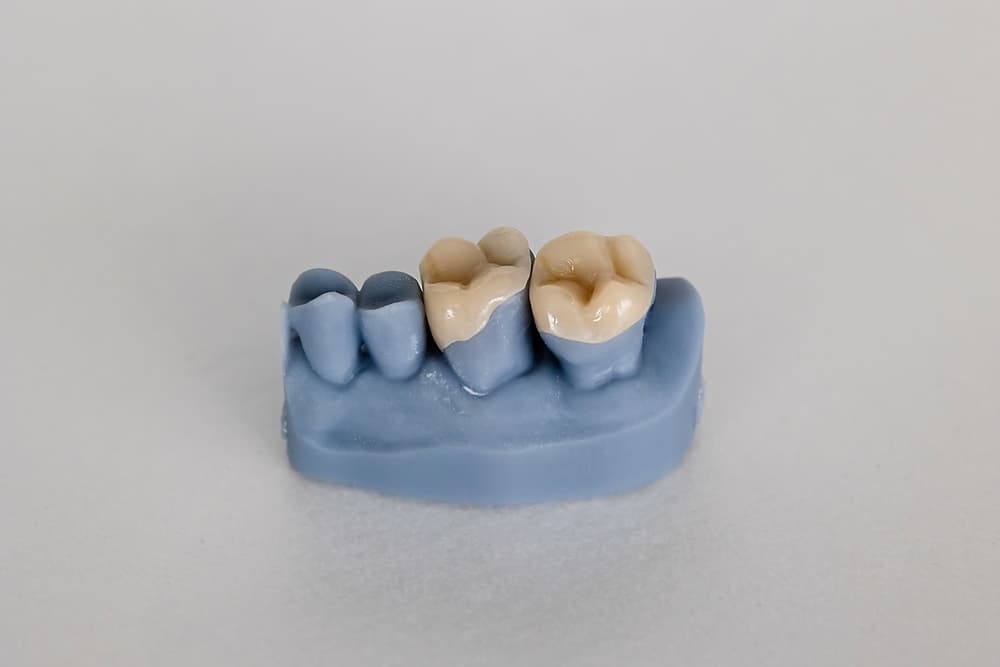
A dental onlay is similar, but larger. As well as filling the centre of the tooth, it extends over one or more of the cusps to protect them. Because it covers part of the biting surface, an onlay is sometimes called a partial crown.
Onlays are often used when a cusp is cracked, weakened or has broken off, but the rest of the tooth is healthy.
An inlay sits within the cusps, while an onlay covers at least one of them. Your dentist will recommend one or the other depending on how much of the tooth’s biting surface needs support.
A crown is a cover that fits over the whole visible part of the tooth, down to the gum line. To make room for it, the tooth is shaped on every side, so more natural tooth is removed than for an onlay.
That extra coverage is useful when a tooth is badly broken down, as the crown holds what’s left together. You can read more on our dental crowns page.
Both are made in a dental laboratory and usually need two visits, with a temporary one in between. The main difference is how much tooth is covered, and how much is kept.
Coverage and tooth kept: An inlay or onlay covers only the damaged part of the tooth, so less natural tooth needs to be removed. A crown covers the whole visible tooth, and the tooth is shaped on all sides to make room for it.
Where the edge sits: The edge of an inlay or onlay often sits above the gum line, which can make it easier to clean. A crown’s edge usually sits at or just below the gum.
Materials and visits: At East Park Dental, inlays and onlays are made from porcelain or gold, and crowns from porcelain or metal. Both usually take two visits.
Cost: Porcelain crowns start from £890, or £755 for members. The cost of an inlay or onlay is confirmed in your written treatment plan.
Because an onlay keeps more of your own tooth, a crown can often still be an option later if the tooth ever needs further treatment. Going the other way isn’t possible: once a tooth has been shaped for a crown, that tooth structure can’t be put back.
Keeping more teeth is a good aim, but an onlay isn’t always enough. A crown is usually the better choice when:
In these cases, choosing the smaller option could leave the tooth at risk of breaking further. We’ll tell you plainly if we think a crown will protect your tooth better.
The choice starts with a proper look at the tooth. At your appointment, your dentist will examine it, check any old filling, look for cracks, and may take an X-ray to check the root and surrounding bone.
The key question is how many healthy teeth are left, and where. Your dentist will then explain the options that suit your tooth, including what each involves and costs, so you can decide together.
Inlays, onlays and crowns usually follow a similar process over two appointments:
As with any dental treatment, there are some risks. Some people notice sensitivity to hot or cold for a few weeks afterwards. Over time, a restoration can chip, wear or come loose, and may need repairing or replacing. If the tooth is already heavily damaged, it may still need further treatment in future, such as root canal treatment or a crown.
When more than one option could work, your dentist will talk you through the benefits and limitations of each. You’re always welcome to take time to think it over, or to seek a second opinion before going ahead.
At East Park Dental, we offer inlays and onlays in porcelain or gold, as well as crowns. Before any treatment begins, you’ll receive a written treatment plan showing what’s involved and what it will cost. You can see our guide fees on our prices page.
If you have a large filling, a cracked tooth or a broken corner, a dental health check is the place to start. Your dentist will look at the tooth and explain which options suit it.
To book an appointment with a dentist in Northampton, contact East Park Dental on 01604 638102 or book online.
This article provides general information only and is not a substitute for personalised advice from a registered dental professional.